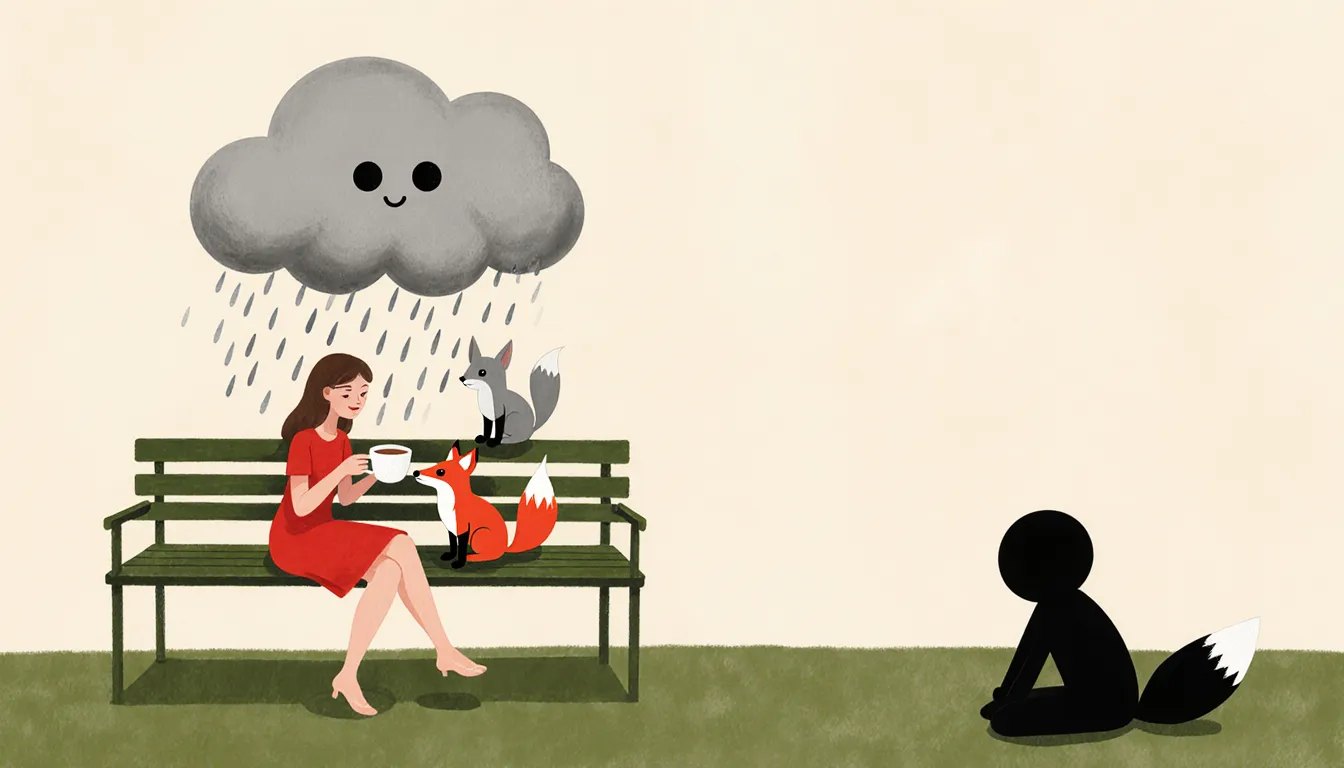
Making Friends
with Your Emotions
How to deal with difficult emotions like anger, grief and fear instead of fighting them
Emotions are with us all the time. They take over, they cloud our judgment, they make life harder than it needs to be. When I work with people, I often hear: "It's very complicated." I smile a little and say: "No, it's simple."

Here's why — and a few ways to let your emotions stop running the show.
Your pain isn't as unique as it feels
We all overestimate our own emotions. They feel exceptional because they're ours. Other people have it easier, we think. They have it better.
That isn't true. Consciously or not, we glorify our suffering — and in doing so, we make the biggest possible mess inside.
What feels complicated and one-of-a-kind is, in most cases, simple and human. Try saying: "I feel anger. Sadness. Fear. Like everyone does." Suddenly it's easier to sort out.
And talk to people. If we shared more of what goes on inside, we'd discover how alike we are — and that we're not alone in it.
Ask a different question
The most common mistake is asking the wrong question. We ask: why did this happen? We grind the facts over and over, looking for logic, and stay stuck in a loop.
The question that helps isn't "why did this happen?" It's "why do I feel this way?"
Events are neutral. We give them their emotional meaning, based on how life has shaped us.
That's why situations come back like a boomerang. They can look completely different on the surface — and carry exactly the same emotion.
A harsh word from your boss can trigger precisely what you felt when your partner forgot your birthday. Two different events, one feeling: "my needs don't matter." Analyze the events separately and you'll miss the connection.
So instead of chasing details, ask: Have I felt this before? Is this feeling familiar? Learning to see the emotion apart from the event makes untangling things far easier.
Stop fighting
The worst thing you can do with an emotion is try to defeat it.
Emotions simply exist, and they always will. Accept them, and they leave more easily. Fight them, and you get angry at yourself for being sad, frustrated with yourself for being angry — layering new tension on top of the old.
This is hardest with grief. Most of us want it gone as fast as possible, to prove we're strong and back on our feet. But grief has to be lived through. Let it be. It will pass. Pushed down, it comes back later — as depression, pain, or something you don't expect.
The question that helps isn't “why did this happen?” It's “why do I feel this way?”
Cry
"Don't cry" may be the stupidest advice I've ever heard.
Crying is your body's natural way of dealing with too much emotion. Because it's uncontrolled, it cleanses more deeply than any meditation or analysis. It's a wholesale release of frustration, fear and sadness.
Don't hold it back. Cry fully, and you'll get back on your feet faster.
Give yourself the right to feel
Difficult emotions are human. Trying to control or suppress them almost always makes them stronger.
Be patient with yourself. Rest when you need to, instead of forcing yourself to be stronger or more capable than you are right now.
Give yourself the right to feel, to be and to live it through. From there, even the hardest challenges become easier to face.
Questions people ask
How do I stop overthinking why something happened?
Change the question. Instead of why did this happen, ask why do I feel this way. Events are neutral, we give them meaning. When people bring me a situation that keeps repeating, we look for the emotion underneath, the one they've felt before. Seeing the emotion apart from the event is usually the moment something finally untangles.
Should I try to control or suppress my emotions?
No. The worst thing you can do with an emotion is try to defeat it. Fight it, and you layer new tension on old: angry at yourself for being sad, frustrated for being angry. A big part of my work with clients is simply helping them stop that fight. Accepted emotions leave more easily, and people feel lighter surprisingly fast.
Is it good to cry?
Yes. Don't cry may be the stupidest advice I've ever heard. Crying is your body's natural way of dealing with too much emotion. Because it's uncontrolled, it cleanses more deeply than any meditation or analysis, releasing frustration, fear and sadness at once. Cry fully, and you'll get back on your feet faster.
How do I act when I'm afraid?
Don't wait to stop being afraid, because that never happens. Successful people were scared too. Look back at similar situations you got through, then look at it with a cool head: what can you actually lose and gain? Then say it plainly: I'm scared, and I'll do it anyway. Fear exaggerates losses, trust in yourself shrinks it.
Contact
Before booking, I talk with everyone about what brings them to me. If I know I can help, we set a date. If not, I'll tell you honestly. I'd rather say no than offer you a session you don't need. Write briefly what's on your mind. I reply personally within 48 hours.
Sessions complement, but do not replace, medical or psychological care.